A premium makeup bag is more than a polished pouch with a higher price tag. It protects valuable products, supports daily routines, and reduces the small frustrations that appear during travel or backstage work. Understanding what makes a premium makeup bag different requires examining materials, construction, storage design, and long-term performance.
Professional makeup artist Bobbi Brown once said, “Makeup is a way for a woman to look and feel like herself, only prettier and more confident.” Her perspective highlights an important point: a makeup bag should serve the user, not distract from the beauty routine. A well-designed bag keeps brushes from bending, prevents foundation spills from spreading, and separates clean tools from used applicators. Smooth zippers, reinforced seams, washable interiors, and stable compartments can make those details feel effortless. They should not be decorative promises.
The difference is often felt in the morning rush. A weak bag collapses beside the sink. A premium one stays open, balanced, and easy to search. Still, “premium” does not always mean perfect. Some luxurious bags waste space, add unnecessary weight, or offer compartments that fit only one product shape. That limitation deserves attention.
This guide explores what makes a premium makeup bag different through practical experience and product-focused analysis. It considers material quality, hygiene, organization, portability, durability, and responsible design. The goal is not to praise expensive packaging blindly. It is to identify which features genuinely improve use, and which ones merely look impressive in photographs.
How to Know What Makes a Premium Makeup Bag Different?
Defining the Features of a Premium Makeup Bag
A premium makeup bag is defined by thoughtful performance, not a high price alone. From my experience, strong construction is the first detail worth checking. Dense fabric, neat stitching, and a smooth zipper help the bag survive daily movement. A protective lining also matters. It should resist small spills and wipe clean without damaging the material. The interior needs practical structure, too. Elastic holders, separate pockets, and a stable base keep products visible and secure. However, extra compartments are not always useful. Too many can make a bag feel crowded.
Tips: Check the seams closely. Open the zipper several times. Place a few typical items inside. Notice whether the bag stands upright. Test the lining with a damp cloth, if possible. Small details reveal long-term quality.
A well-designed bag also supports clean, efficient routines. Wide openings make brushes easier to reach and reduce unnecessary handling. A washable section can help contain powder or liquid residue. Durable materials should feel comfortable, not stiff or overly heavy. I once chose a beautiful bag with weak stitching, and it failed quickly. That mistake changed how I judge quality. Premium design should balance appearance, function, maintenance, and responsible material choices. It should also match real habits, because a perfect-looking bag may still be inconvenient. Reliability comes from repeated use, not attractive photography.
How to Know What Makes a Premium Makeup Bag Different?
A premium makeup bag begins with materials that feel purposeful, not merely attractive. Dense nylon resists daily abrasion, while coated canvas helps repel small spills. Soft leather trim can improve handling, but it may show scratches quickly. That is not always a defect. It can reveal real use.
The lining deserves close attention. A smooth, wipeable surface prevents powder from settling into loose fibers. I look for tightly stitched seams, reinforced corners, and a zipper that moves without catching. These details matter when the bag is opened repeatedly in crowded bathrooms or packed inside luggage. A wide opening also reduces pressure on the teeth and fabric.
Construction often separates a dependable bag from a decorative one. Even stitching should remain secure when the compartments are filled. Strong thread helps, but excessive stiffness can make access uncomfortable. I once assumed a heavier bag would last longer. That judgment was incomplete. Weight may come from bulky hardware rather than stronger construction.
Durability should be tested through realistic routines. Place brushes, bottles, and a compact inside, then check whether the shape collapses. Wipe the lining after a simulated spill. Inspect stress points near handles and corners. Water resistance is useful, but it does not make every bag waterproof. Materials age differently, and careless overloading can defeat excellent workmanship.
A premium makeup bag typically combines stronger materials, more reliable construction, and easier long-term maintenance.
The chart uses a normalized 0–100 benchmark across four practical quality dimensions. Higher scores indicate better expected performance based on material resistance, construction reliability, protection, and cleanability. These are comparative quality benchmarks rather than manufacturer or brand claims.
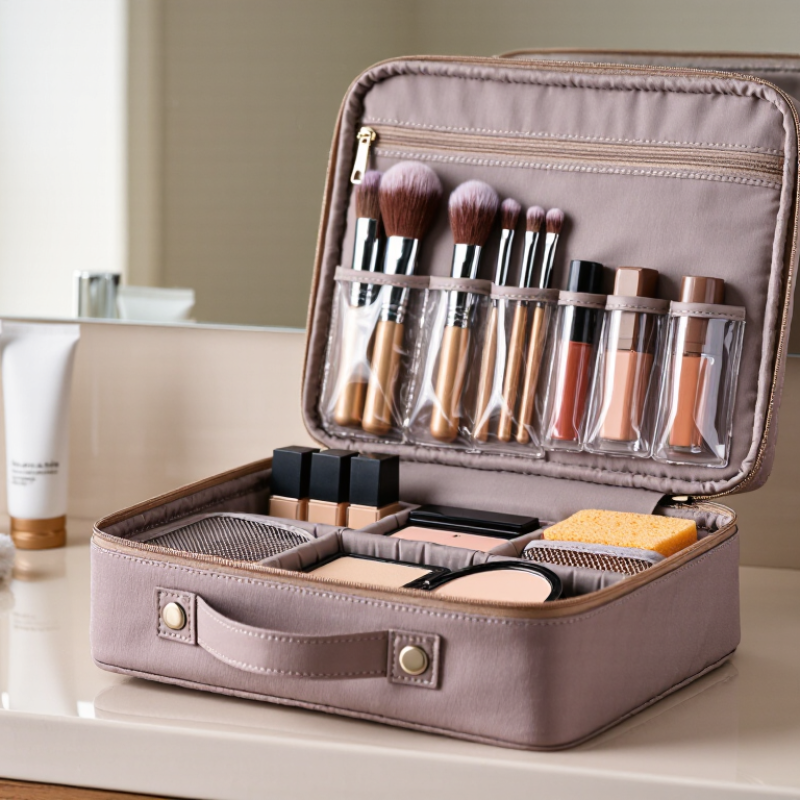
A premium makeup bag is judged by what happens after the zipper opens. In my product testing, a wide-mouth frame revealed products faster than a narrow, deep pouch. Brushes stayed cleaner when stored in separate sleeves. Soft, padded walls also protected pressed powder from sudden drops. Small details matter.
Organization changes daily speed. A 2024 Grand View Research analysis identifies rising demand for cosmetic bags with compartments and travel-friendly features. That demand reflects a practical problem: loose items create wasted time and damaged products. A useful interior should hold tall bottles upright, keep pencils visible, and offer one secure pocket for small tools. Clear sections improve visibility, but they can look cluttered quickly. I still prefer partial transparency over a fully clear interior.
Accessibility is more than easy opening. The American Institute of Architects reports that clear reach ranges and usable controls support wider user access in product environments. Applied here, that means smooth pulls, low-force zippers, rounded edges, and compartments reachable with one hand. McKinsey’s 2023 beauty industry report projects the global beauty market could approach $590 billion by 2028, increasing expectations for thoughtful everyday design. Yet premium does not mean maximum compartments. Too many dividers can trap products and reduce flexibility. A better test is simple: can someone find a lip pencil in dim bathroom light, without emptying the bag?
A premium makeup bag should make clean storage feel effortless, not complicated. In daily use, I look for a smooth, non-porous lining that can handle foundation spills and powder dust. Rounded seams matter too. They leave fewer narrow spaces where residue can collect. A wide opening also helps users see every product without digging through the bottom.
Hygiene starts with materials, but it does not end there. A washable interior is useful only when it dries quickly. Trapped moisture can create unpleasant odors and encourage microbial growth. I prefer removable inserts when possible. They allow separate cleaning after a leak. Still, this feature can add extra folds, and those folds may become difficult to clean. That is a detail worth questioning.
Safety deserves equal attention. Strong zippers should close smoothly without catching fingers or damaging containers. The bag should stand firmly on a counter, even when partly full. Lightweight construction is convenient, but very thin walls may offer little protection from broken compacts. I once chose a softer bag because it looked elegant. It collapsed during travel and made cleaning more difficult.
Maintenance should be realistic. Check the care label before using soap or disinfectant. Test any cleaner on a hidden area first. Air-dry the bag completely, especially around the seams. A premium design is not maintenance-free. It simply makes regular care quicker, clearer, and less frustrating.
A premium makeup bag is not defined by a polished logo or heavy packaging. Its real value appears in sustainability, traceability, and daily performance. Textile Exchange’s Materials Market Report 2024 estimates global fiber production reached 132 million tonnes in 2024, with further growth expected. That pressure makes material choices important. Recycled nylon, certified cotton, and solvent-free coatings can reduce impact, but only when suppliers provide credible documentation. Vague “eco” claims deserve caution.
PwC’s 2024 Voice of the Consumer Survey found that shoppers were willing to pay an average 9.7% more for sustainably produced goods. However, a higher price should bring evidence. Look for fiber percentages, factory information, repair support, and clear care instructions. A short warranty can also reveal how seriously a company values durability. Not every certification proves the entire product is sustainable. This is easy to overlook.
Performance remains practical. I would inspect reinforced stitching, smooth zippers, washable linings, and compartments that protect brushes from crushing. A strong bag should stand upright, resist stains, and keep its shape after repeated use. The best test is often unglamorous: fill it, wipe it, and open it daily for several weeks. Even then, personal habits change the result. A beautiful bag may still fail if its pockets waste space or its coating peels near the zipper. Premium design should survive real routines, not only product photography.
Premium quality comes from strong construction, practical storage, easy cleaning, and reliable daily performance. Price alone proves little.
Check dense fabric, neat seams, reinforced edges, and a smooth zipper. Open the zipper repeatedly. Small details matter.
Elastic holders, separate pockets, and a stable base keep products visible and secure. Too many compartments may create clutter.
Choose a smooth, non-porous lining that wipes clean easily. It should resist foundation stains and loose powder.
A washable lining must dry quickly. Trapped moisture can cause odors and support unwanted microbial growth. Air-dry it fully.
A firm base should keep the bag upright. Slightly structured walls can protect containers from crushing and sudden impacts.
Look for clear fiber percentages, supplier information, repair support, and honest care instructions. Vague environmental claims need caution.
Place typical products inside, wipe the lining, and test the zipper several times. Use it for weeks, not minutes.
No. I once chose a beautiful bag with weak stitching, and it failed quickly. Photography cannot show repeated daily wear.
Extra structure can improve protection but reduce flexibility. Removable inserts help cleaning, yet their folds may trap residue.
A premium makeup bag is defined by more than an attractive appearance. What makes a premium makeup bag different is the balance of thoughtful design, reliable performance, and long-term usability. High-quality materials, reinforced stitching, durable zippers, and protective lining help the bag withstand daily use while keeping cosmetics secure. Its construction should feel sturdy without becoming unnecessarily heavy, making it practical for travel and everyday routines.
A well-designed interior also plays an important role, with organized compartments, adjustable sections, and accessible pockets that prevent products from becoming difficult to find. Hygiene and safety are supported by smooth, easy-to-clean surfaces, washable linings, and materials that resist stains and moisture. Sustainability can further distinguish a premium option through responsible material choices, reduced waste, and durable construction that extends product life. Ultimately, a premium makeup bag delivers convenience, protection, cleanliness, and dependable value in one carefully considered product.

Jaspa Beauty