Why Learn How to Identify a Quality Cosmetic Bag?

Time:2026-09-22 Author:Charlotte
0%

Learning how to identify a quality cosmetic bag can prevent disappointing purchases and protect your daily beauty essentials. A stylish appearance is not enough. Looks can mislead. A reliable cosmetic bag should combine durable materials, thoughtful construction, safe storage, and easy maintenance.

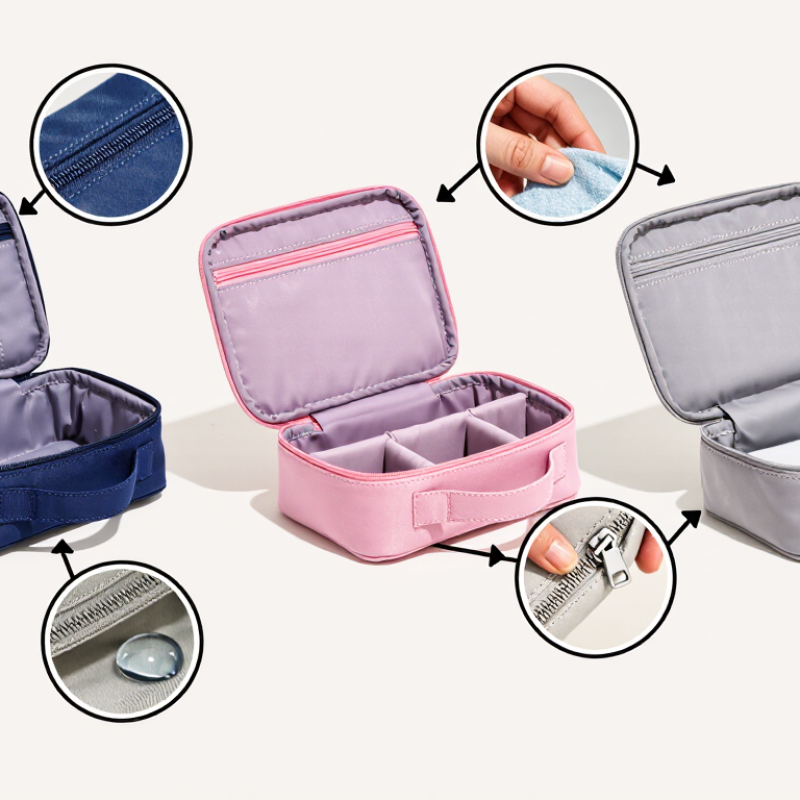
In practical product assessment, inspect the fabric before judging its color or shape. Dense polyester, coated cotton, or well-finished nylon usually handles regular travel better than thin, loose fabric. Run your fingers along the seams. Even stitching, reinforced corners, and clean edges suggest better workmanship. Test the zipper gently. It should move smoothly without catching or separating. Small details matter.

The lining also deserves attention. A smooth, wipeable interior helps contain powder, lotion, or accidental spills. However, “water-resistant” does not always mean fully waterproof. Read the product description carefully, and look for clear care instructions, material information, and dependable seller details. A strong handle, stable base, and useful compartments can improve everyday convenience. Yet more pockets do not automatically mean better design.

Why learn these checks? Because quality affects hygiene, organization, durability, and value over time. A cosmetic bag used beside a sink or inside a crowded suitcase needs practical protection, not decoration alone. No checklist is perfect. Personal habits, cleaning routines, and the products you carry still influence performance. Even so, understanding how to identify a quality cosmetic bag gives buyers a clearer, more informed way to compare options. Reliable choices usually come from evidence, not attractive photographs or exaggerated promises.
Why Learn How to Identify a Quality Cosmetic Bag?

What Defines a High-Quality Cosmetic Bag?

A quality cosmetic bag is defined by thoughtful construction, not a glossy appearance. In my experience, dense fabric, even stitching, and reinforced seams handle daily packing better. The surface should feel firm but not stiff. A loose thread may seem minor, yet it can reveal weak finishing.

The interior matters just as much. A smooth, wipeable lining helps remove powder, lotion, or accidental spills. Check whether the lining sits flat around the corners. High-quality zippers should open without catching, while the pull should feel secure in your hand. The bag also needs useful structure. It should stand when opened, protect small containers, and fit comfortably inside a suitcase. Some bags look spacious, but thick padding can reduce usable room.

Tips: Test the zipper several times. Press the seams gently. Look inside every corner. Smell the material, too; a strong chemical odor deserves caution. I once chose a beautiful bag with excellent fabric but poor interior space. It became frustrating after only a week. That mistake reminded me to judge function before appearance. Check the handle, lining, and base carefully. A reliable cosmetic bag should feel balanced, cleanly finished, and practical during real use.

How to Evaluate Materials, Stitching, and Construction

Why Learn How to Identify a Quality Cosmetic Bag?

Material choice affects durability, hygiene, and environmental impact. Textile Exchange reported that global fiber production reached about 124 million tonnes in 2023. Polyester made up more than half of that volume, so material claims deserve careful attention. A reliable cosmetic bag should list its outer fabric, lining, and coating clearly. Recycled polyester can be useful, but “eco” wording alone proves little. Feel the fabric. Dense fibers should resist snagging, while a smooth lining should wipe clean without flaking.

Stitching reveals more than appearance. Check whether seams use even, tight stitches with no skipped sections. Stress the zipper corners gently. Weak bags often wrinkle there. Reinforced handles should have box or cross stitching, not a single narrow line. ASTM D1683, a recognized textile standard, evaluates seam strength through controlled testing. Retail samples rarely provide those results, which is an important limitation. A confident inspection still needs caution.

Construction matters during daily use. Look for bound seams, protected zipper ends, and a base that keeps its shape. A soft bag may feel pleasant, yet collapse around glass containers. I once trusted a beautifully finished pouch with a thin lining; it stained quickly and became difficult to clean. That mistake still matters. Examine the interior under bright light. Small gaps may become large tears after repeated packing. A quality cosmetic bag should feel balanced, not merely attractive.

Why Learn How to Identify a Quality Cosmetic Bag? - How to Evaluate Materials, Stitching, and Construction

Use the criteria below to compare cosmetic bags objectively. A high-quality bag should combine durable materials, secure stitching, smooth operation, practical organization, and easy maintenance.

Evaluation Area What to Inspect High-Quality Indicators Acceptable Indicators Warning Signs Simple Evaluation Method
Outer Material Fabric density, surface finish, flexibility, and resistance to abrasion. Tightly woven fabric or well-finished synthetic material; surface feels even and resists light rubbing. Moderately dense fabric with minor texture variation but no visible weak areas. Loose weave, flaking surface, thin spots, strong chemical odor, or visible discoloration. Examine the surface under bright light and gently rub a hidden area with a clean, dry cloth.
Water Resistance Ability of the exterior and lining to slow liquid penetration. Water forms beads on the exterior and can be wiped away; lining remains dry during a brief spill test. Material delays absorption but may darken slightly after contact with water. Liquid spreads immediately, soaks through quickly, or causes dye transfer. Place a few drops of water on an inconspicuous area, wait 30–60 seconds, and wipe gently.
Interior Lining Cleanability, tear resistance, and attachment to the outer shell. Smooth, wipe-clean lining with neatly finished edges and no loose sections. Lining is serviceable but has slightly rough seams or limited stain resistance. Unfinished edges, peeling coating, exposed foam, or lining that bunches easily. Open every compartment, inspect the corners, and wipe a small area with a damp cloth.
Seam Quality Stitch length, straightness, thread tension, and seam consistency. Even stitches, consistent spacing, no skipped stitches, and reinforced stress points. Small variations are present but seams remain secure and fully closed. Skipped stitches, large gaps, loose thread loops, puckering, or unraveling edges. Inspect both sides of each seam and gently pull adjacent panels in opposite directions.
Thread and Reinforcement Thread strength and reinforcement at handles, corners, zipper ends, and attachment points. Stress areas use dense stitching, bar tacks, boxed stitching, or another visible reinforcement method. Main attachment points are stitched securely but have limited additional reinforcement. Handles or loops are attached with a single weak seam or show thread separation under light tension. Apply gentle, even pressure to handles and loops without forcing the product beyond normal use.
Zipper Performance Slider movement, tooth alignment, tape strength, and end stops. Zipper opens smoothly without catching; teeth remain aligned and ends are securely closed. Minor resistance occurs at corners but the zipper remains functional. Slider catches repeatedly, teeth separate, tape frays, or the zipper pulls away from the seam. Open and close the zipper at least five times while checking corners and both ends.
Shape and Structure Panel alignment, base stability, padding, and ability to retain its form. Bag stands or rests evenly, panels align, and padding protects containers without excessive stiffness. Shape is generally stable but softens when empty or shows minor asymmetry. Bag collapses unevenly, has distorted panels, exposed sharp edges, or weak corners. Place the empty bag on a flat surface, then fill it lightly and check whether its shape remains balanced.
Interior Organization Pockets, elastic loops, dividers, and usable compartment dimensions. Compartments hold common cosmetic containers securely without blocking access to other items. Basic storage is available but some pockets are narrow or difficult to reach. Pockets sag, openings are too small, or dividers detach during normal handling. Test the bag with a few common items such as tubes, bottles, brushes, and compact containers.
Edge Finishing Binding, folded edges, piping, and protection against fraying. Edges are fully covered, smooth, and securely attached with no exposed raw material. Most edges are finished, with minor roughness in concealed areas. Raw edges, fraying, peeling binding, or sharp unfinished corners are visible. Run a finger carefully along the inside and outside edges and inspect all four corners.
Hardware Quality Material, coating, attachment, and resistance to corrosion or deformation. Hardware feels solid, operates correctly, and has an even finish without sharp edges. Hardware functions normally but feels lightweight or has minor finish variation. Brittle parts, flaking coating, sharp edges, loose rings, or visible corrosion. Operate snaps, hooks, sliders, and rings repeatedly while checking for looseness or surface damage.
Odor and Cleanliness Manufacturing odor, loose fibers, dust, and residue inside the bag. Minimal odor, clean interior, and no loose fibers or adhesive residue. A mild temporary material odor is present but not irritating. Strong persistent odor, oily residue, visible dirt, or adhesive contamination. Inspect and smell the bag in a well-ventilated area before placing cosmetics inside.
Maintenance and Safety Ease of cleaning, care instructions, and safe contact with personal-care products. Care instructions are clear; surfaces can be cleaned without damaging the finish. Basic spot cleaning is possible but the care guidance is limited. No care guidance, dye transfers easily, or cleaning causes peeling or deformation. Review the care label and test cleaning only on a concealed area using a mild solution.

Why Size, Compartments, and Design Features Matter

Why Learn How to Identify a Quality Cosmetic Bag?

Why Size, Compartments, and Design Features Matter

A quality cosmetic bag should match your daily routine, not simply look attractive. I once bought a stylish pouch that could not hold basic skincare items. It became frustrating within a week. Measure your usual products before choosing a size. A compact bag suits short trips, while a larger design works better for full routines. However, oversized bags can encourage unnecessary packing.

Compartments help separate items and reduce messy spills. Look for elastic loops, zipped pockets, and flexible sections. Brushes need protection from pressure and product residue. A waterproof lining also makes cleaning easier after a liquid leak. Still, too many compartments may waste space. I have found that three useful sections often outperform ten narrow pockets.

Design features should support real movement. A wide opening lets you see small items without emptying the entire bag. Strong handles make it easier to carry between rooms or travel locations. Smooth zippers and reinforced seams usually suggest thoughtful construction, though appearance alone proves little. Check the stitching, lining, and base by hand. Some bags feel excellent in a shop but become awkward when filled. That possibility deserves consideration.

How Durability and Safety Affect Everyday Use

Why Learn How to Identify a Quality Cosmetic Bag?

Durability and safety shape how a cosmetic bag performs every day. A weak zipper can expose creams, powders, or sharp tools inside a handbag. A thin lining may tear after repeated cleaning. Look for dense stitching, reinforced seams, and a smooth zipper that does not catch fabric. I use a simple test: fill the bag, lift it by the handle, and inspect the corners. Small failures often appear there first.

Material safety deserves equal attention. Cosmetic residue can remain in warm, closed spaces, especially after a spill. ISO 17516:2014 sets microbiological quality expectations for cosmetics, including limits of 100 colony-forming units per gram or millilitre for products used around the eyes or on mucous membranes. A bag cannot control contamination alone, but a washable, quick-drying lining supports better hygiene. The SCCS Notes of Guidance, 12th revision, published in 2023, also treats microbial quality as a safety concern rather than a visual preference. Avoid strong chemical odors, peeling coatings, and rough surfaces that may irritate skin.

A practical design should separate wet and dry items. It should also open wide enough for proper cleaning. I once preferred a compact bag because it looked neat. It became difficult to clean. That choice was not ideal. Check whether the lining dries within a day, whether seams hold after gentle washing, and whether the structure protects glass containers during normal movement. WHO hygiene guidance also supports keeping reusable surfaces clean and dry, a detail that is easy to overlook.

How Quality Assessment Improves Value and Buying Decisions

Learning to identify a quality cosmetic bag improves more than appearance; it protects money, products, and daily routines. In my product checks, I begin with the fabric, stitching, zipper, and lining. A dense fabric should resist light abrasion without feeling stiff or noisy. Even seams matter. Loose threads often reveal rushed production, although one imperfect stitch does not condemn the entire bag. I also test the zipper repeatedly, because a smooth first impression can hide weak teeth or a fragile pull. Details matter.

Quality assessment turns vague preference into a more reliable buying decision. A washable lining may cost more initially, yet it can reduce replacement costs after powder spills or liquid leaks. Compartments should match real habits, not merely look organized in photographs. Measure the products you carry. A bag with unused pockets may add bulk without adding value. I once favored a stylish case with a stiff opening, then found it awkward on a crowded bathroom shelf. That mistake changed my evaluation: comfort, access, capacity, and maintenance deserve equal attention. Still, no checklist predicts every experience. Personal routines differ, and advertised durability should be judged against clear materials and construction details, not promises alone. This approach supports informed purchases and makes price comparisons more honest.

Why Learn How to Identify a Quality Cosmetic Bag?

How quality assessment improves value and buying decisions

This brand-neutral assessment model scores the main quality checkpoints from 0 to 10. Higher scores indicate better expected durability, easier maintenance, and stronger everyday value. Inspecting fabric strength, water resistance, stitching, zipper performance, lining quality, and cleanability helps buyers compare products beyond appearance or price alone.

The inspection categories are based on commonly used textile evaluation concepts, including tensile strength, seam performance, water repellency, abrasion resistance, and laundering durability. The scores represent a transparent example assessment framework rather than company or brand data.

FAQS

How should I choose the right cosmetic bag size?

Measure the skincare and makeup items you carry regularly. A compact bag suits short trips. Larger bags fit complete routines, but excess space may encourage overpacking.

Why are compartments useful in a cosmetic bag?

Compartments separate products and reduce messy spills. Elastic loops can hold brushes, while zipped pockets secure small items. Too many narrow pockets may waste valuable space.

How many sections does a practical bag need?

Three flexible sections often provide enough organization. They can separate liquids, tools, and daily products. More pockets are not always better.

What design features improve everyday access?

A wide opening lets you see small items without emptying the bag. Strong handles help with carrying between rooms or travel locations. Easy access matters.

Which materials and construction details should I inspect?

Check the fabric, stitching, zipper, lining, and base by hand. Dense fabric should resist light abrasion without feeling stiff or noisy. Loose threads may indicate rushed construction, though one imperfect stitch is not decisive.

Why is a waterproof or washable lining valuable?

It makes cleanup easier after powder spills or liquid leaks. A washable lining may cost more initially but can reduce replacement costs. Cleaning still takes effort.

How can I test a zipper before buying?

Open and close it repeatedly. Look for smooth movement, strong teeth, and a secure pull. A good first impression can hide weakness.

Can an attractive cosmetic bag still be poor quality?

Yes. A stylish bag may have limited capacity or a stiff opening. I once chose appearance over access and regretted it on a crowded bathroom shelf. Personal routines can expose problems that photographs hide.

How should I judge whether a cosmetic bag offers good value?

Compare capacity, comfort, maintenance, and construction instead of appearance alone. Measure your usual products before comparing prices. No checklist predicts every experience, so reflect on your actual habits.

Conclusion

Learning how to identify a quality cosmetic bag helps consumers choose a product that is practical, durable, and suitable for everyday use. A high-quality cosmetic bag is defined by reliable materials, neat and reinforced stitching, strong construction, and a thoughtfully designed interior. When evaluating one, consider whether the fabric is sturdy and easy to clean, the seams are secure, and the closures operate smoothly. These details can reveal how well the bag will withstand regular handling.

Size, compartments, and design features also play an important role in convenience. A well-organized bag should provide enough space for essential items while keeping them easy to find. Durable construction and safe, non-irritating materials can improve confidence during daily use, travel, and storage. By learning how to identify a quality cosmetic bag, shoppers can compare products more carefully, avoid poor-value purchases, and select an option that offers lasting performance, practical organization, and better overall value.

Charlotte

Charlotte

Charlotte is a seasoned marketing professional with a deep understanding of the company's portfolio and a passion for elevating its presence in the market. With a keen eye for detail and a commitment to excellence, she ensures that our professional blog is regularly updated with insightful articles......