China’s beauty market is moving beyond formulas and into the tools used every morning. Reusable cleansing pads, bamboo brushes, refillable containers, and recycled travel cases now appear across Chinese retail channels. The shift is visible.
According to Euromonitor International’s 2024 Voice of the Consumer research, environmental responsibility increasingly influences purchase decisions, although price and product performance remain important. NIQ’s 2023 State of Sustainability report also found that many consumers consider sustainability valuable, but fewer consistently pay a premium. This gap matters. It explains why affordable eco beauty accessories may attract wider demand than luxury alternatives.
The question is: why are eco friendly beauty accessories growing in demand? China’s answer combines urban lifestyles, digital commerce, and stronger consumer attention toward packaging waste. McKinsey’s China consumer research has repeatedly identified quality, convenience, and trust as major purchase drivers. Eco accessories can meet these needs when they dry quickly, last longer, and feel safe against the skin. A reusable facial pad beside a bathroom sink offers a clear daily benefit. It reduces disposable use without requiring a dramatic lifestyle change.
However, “eco” is not automatically sustainable. Materials, manufacturing, transport, cleaning, and end-of-life disposal all affect environmental performance. The Ellen MacArthur Foundation has emphasized the need to reduce waste through reuse and circular design, not simply replace one material with another. Therefore, this China Top 10 guide evaluates accessories through practical evidence, material transparency, durability, hygiene, and user experience. Some products may look greener than they perform. That deserves honest reflection.
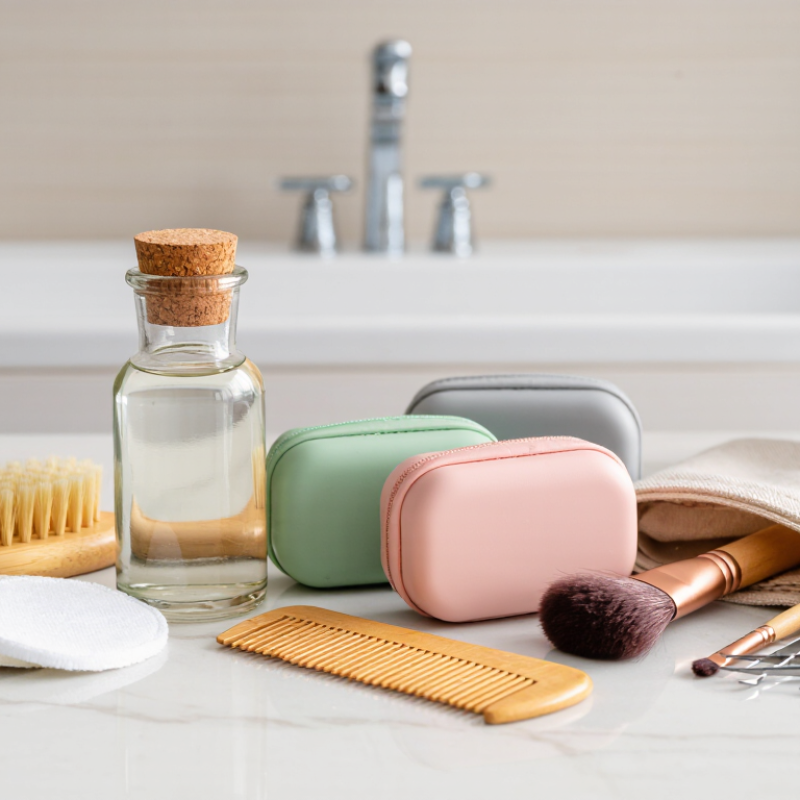
Eco beauty accessories are reusable or responsibly made tools used in daily personal care. They include bamboo brushes, washable makeup pads, stainless steel razors, refillable containers, and plant-based hair accessories. Their value goes beyond appearance. They can reduce single-use waste when designed for repeated use and proper cleaning.
A washable makeup pad feels different from a disposable cotton round. It may need more rubbing, drying space, and regular washing. That small routine matters. In practical use, durability often determines whether an accessory creates less waste. A weak handle or fabric that holds odors can shorten its life. Buyers should check material quality, care instructions, packaging, and disposal options before choosing.
Eco claims also require careful judgment. “Natural” does not automatically mean sustainable, and reusable products still consume water during cleaning. A reliable evaluation considers the full product life cycle, including manufacturing, transport, use, and end-of-life treatment. Independent material standards and clear supplier information can improve confidence, but they do not remove every concern. Sometimes the greener option is the accessory already owned and used longer. That answer feels less exciting. It may be more honest. Demand is rising because consumers increasingly connect beauty routines with household waste, resource use, and personal responsibility. Small tools can influence habits, but only when convenience, hygiene, and durability work together.
The Top 10 Eco Beauty Accessories Made in China
China’s beauty accessory factories now offer practical, lower-waste alternatives for daily routines. The leading ten include bamboo makeup brushes, reusable cotton rounds, washable facial towels, refillable travel bottles, stainless steel facial rollers, natural loofah sponges, recycled plastic combs, silicone cleansing pads, cork cosmetic bags, and reusable makeup remover gloves.
From hands-on product checks, bamboo handles feel comfortable when sealed correctly. Brush fibers should remain secure after repeated washing. Reusable cotton rounds need tight stitching and quick drying. Otherwise, unpleasant odors may develop. Refillable bottles work best with leak-resistant caps and clear material markings. Stainless steel rollers are durable, but their edges must be polished smoothly. Small details matter.
Loofah sponges offer useful texture for body care, while recycled combs can reduce virgin plastic use. Silicone cleansing pads are easy to rinse, though some feel too firm on sensitive skin. Cork cosmetic bags are lightweight and naturally distinctive, but moisture resistance varies. Reusable remover gloves save disposable pads, yet they require careful laundering. Factory quality records, material testing, and clear care instructions improve reliability. Still, “eco” should not be accepted without questions. Packaging, transport distance, product lifespan, and disposal options also affect environmental impact. Some attractive items may fail earlier than simpler designs. That weakness deserves honest review.
The chart compares common eco-design attributes found in ten beauty accessories made with reusable, renewable, recyclable, washable, or biodegradable materials. Products with more attributes can appeal to consumers seeking less disposable packaging and lower everyday waste.
Eco-design score: number of applicable attributes out of five — reusable, washable, renewable, plastic-free, and recyclable or biodegradable. The score describes product characteristics, not company sales.
China’s eco beauty accessories market is expanding as buyers examine materials, durability, and production waste. The strongest products combine practical design with measurable environmental improvements.
Bamboo is common in combs, facial massage tools, and brush handles because it grows quickly. However, fast growth alone does not guarantee sustainability. Producers should verify cultivation records, adhesive safety, and transport distance. Recycled aluminum is used for refillable containers and compact cases. It is lightweight, durable, and widely recyclable. Post-consumer recycled plastic also appears in applicators and storage boxes. Its quality can vary, so suppliers need batch testing and clear material percentages.
Production methods matter just as much. CNC cutting creates accurate wooden parts, but poor nesting can leave large scraps. Some workshops now reuse these offcuts for smaller accessories. Water-based coatings can reduce harsh solvent use, although they may offer weaker moisture resistance. Low-temperature molding can reduce energy demand, but it requires careful process control. Stitching with recycled fibers supports reusable pouches, while heat sealing often improves water resistance. Both methods have trade-offs.
Details matter.
During sourcing checks, inspect surface cracks, loose bristles, and unstable hinges. Ask for material declarations, factory energy data, and durability tests. A product may look natural while using excessive plastic packaging. That contradiction is easy to miss. Eco claims also need review, especially when suppliers provide vague percentages or unverified certificates. Better accessories should last through daily use, not merely photograph well. Some manufacturers are improving quickly, but inconsistent documentation remains a weakness worth questioning.
Global demand for eco beauty accessories is rising as shoppers examine waste beyond the product itself. Reusable makeup pads, bamboo brushes, refillable containers, metal razors, and washable headbands now appear in many daily routines. The change is practical. A washable pad can replace dozens of disposable rounds, while a durable brush may serve for years with proper care.
China has become an important manufacturing base for these accessories because suppliers can combine material sourcing, molding, stitching, and packaging in one production network. From my experience reviewing beauty accessories, buyers increasingly ask for traceable materials, stable dimensions, odor control, and clear care instructions. They also request test reports for skin-contact materials and packaging claims that can be checked. “Eco” alone is not enough.
Small details matter. A bamboo handle should feel smooth, not sharply finished. A silicone cleansing tool should resist tearing after repeated washing. Refillable containers need closures that do not leak in a travel pouch. Yet the market still has weaknesses. Some products use attractive green packaging while offering limited durability. I have also seen washable items promoted without explaining drying time or hygiene routines. That gap can disappoint users and weaken trust. Responsible suppliers should measure product life, reduce unnecessary packaging, and describe limitations honestly. Global buyers are learning to compare performance, maintenance, material evidence, and end-of-life options before placing larger orders.
| Rank | Eco Beauty Accessory | Common Sustainable Material | Main Environmental Benefit | Demand Driver | Expected Reuse Potential | End-of-Life Consideration | Global Demand Outlook* |
|---|---|---|---|---|---|---|---|
| 1 | Refillable Cosmetic Containers | Glass, aluminum, or durable recycled plastic | Reduces the need for repeated single-use primary packaging | Refill systems, packaging-waste reduction, and extended product use | High | Separate components where possible; glass and metals are widely recyclable | Very High |
| 2 | Reusable Makeup Remover Pads | Organic cotton, hemp, bamboo viscose, or recycled fibers | Can replace many disposable cotton rounds during regular use | Low-cost switch to reusable routines and increased awareness of textile waste | High | Natural fibers may be recyclable or compostable only when finishes and blends allow it | Very High |
| 3 | Bamboo or FSC-Certified Makeup Brushes | Bamboo, FSC-certified wood, recycled aluminum, and synthetic fibers | Renewable or responsibly sourced handles can reduce dependence on virgin plastics | Demand for renewable materials and cruelty-free synthetic bristles | High | Mixed-material construction should be disassembled before disposal | High |
| 4 | Reusable Silicone Applicators | Durable, platinum-cured silicone | Washable design can reduce disposable sponge and applicator consumption | Easy cleaning, long service life, and suitability for liquid and cream cosmetics | High | Silicone is durable but generally not accepted in standard household recycling streams | High |
| 5 | Aluminum Cosmetic Tins and Jars | Recycled or recyclable aluminum | Lightweight, durable, and suitable for repeated filling | Plastic-free packaging preferences and strong metal recycling infrastructure | High | Aluminum is widely recyclable, although coatings and mixed closures may require separation | High |
| 6 | Konjac Facial Sponges | Konjac root fiber, sometimes combined with mineral or botanical ingredients | Plant-based cleansing accessory designed for a limited but compostable-use cycle | Interest in plant-based skincare tools and low-plastic bathroom routines | Medium | May be home-compostable when free from synthetic additives and disposed of in suitable conditions | High |
| 7 | Reusable Travel Beauty Bottles | Recycled plastic, glass, or aluminum | Supports repeated refilling instead of purchasing multiple small single-use containers | Travel restrictions, refill culture, and demand for compact zero-waste kits | High | Recycling depends on resin type, labels, pumps, and local collection systems | High |
| 8 | Recycled-Fiber Cosmetic Bags | Recycled polyester, recycled nylon, organic cotton, or hemp | Uses recovered fibers and replaces disposable or short-lived storage products | Travel organization, durable storage, and preference for recycled-content textiles | High | Textile recycling is limited in many markets; blended fabrics and coatings complicate recovery | High |
| 9 | Washable Hair and Spa Headbands | Organic cotton, hemp, recycled polyester, or bamboo-based textiles | Reusable construction can reduce consumption of disposable hair covers and wipes | At-home skincare, spa routines, and demand for washable personal-care accessories | High | Fiber composition and elastane content determine recyclability or biodegradability | Medium-High |
| 10 | Refillable Solid-Cosmetic Travel Cases | Aluminum, stainless steel, glass, or durable recycled plastic | Enables repeated use of solid shampoo, conditioner, cleanser, and makeup products | Growth of waterless formats, lightweight travel products, and reduced liquid packaging | High | Metal cases are generally recyclable; inserts, seals, and magnets may require separate handling | Medium-High |
*Demand outlook is an editorial ranking based on documented sustainability attributes, reusability, packaging-reduction potential, consumer convenience, and compatibility with current circular-economy trends. It is not a company or brand sales forecast.
Reference basis: United Nations Environment Programme (UNEP) guidance on sustainable consumption and plastic pollution; Ellen MacArthur Foundation principles on reuse and circular packaging; International Aluminium Institute information on aluminum recycling; Forest Stewardship Council (FSC) responsible forestry standards; U.S. Environmental Protection Agency (EPA) guidance on recycling and material recovery.
China’s eco beauty accessory market is expanding with wider sustainable packaging demand. Grand View Research valued the global sustainable packaging market at $101.49 billion in 2022. It also projected a 7.7% annual growth rate through 2030. This creates opportunity, but demand alone does not prove supplier reliability.
Choose Chinese suppliers with traceable materials and measurable factory controls. Request material declarations for bamboo, recycled plastic, stainless steel, or paper components. Check whether certificates are current, verifiable, and issued by recognized bodies. ISO 14001 can indicate environmental management, but it does not guarantee every product is sustainable. Ask for production samples, durability tests, moisture resistance results, and packaging details. A reusable applicator that breaks after ten uses is not an eco solution.
Factory audits should review wastewater handling, worker safety, energy records, and subcontracting practices. Request batch numbers and written quality standards before ordering. Small trial orders can reveal inconsistent color, weak hinges, or excessive protective film. These details matter. The Ellen MacArthur Foundation emphasizes circular design, including durability, reuse, and material recovery. Suppliers should explain how each accessory supports those principles. Recycled content claims may still hide unclear sourcing. I would challenge vague phrases such as “green material.” Independent testing costs more, yet cheaper verification can create larger risks later. According to an IBM and NRF consumer study, 57% of consumers had changed purchasing habits to reduce environmental impact, while 77% considered sustainability important. Reliable suppliers should make those expectations visible in documents, samples, and factory evidence.
They are reusable or responsibly made tools for daily personal care. Examples include bamboo brushes, washable pads, refillable containers, and stainless steel razors.
They replace disposable items when used repeatedly and cleaned properly. Their real benefit depends on durability, hygiene, and continued use.
They may require extra rubbing, drying space, and regular washing. A damp pad can hold odors. Care routines matter.
No. Fast growth does not prove sustainability. Check cultivation records, adhesive safety, transport distance, and product durability.
Common materials include bamboo, recycled aluminum, recycled plastic, and recycled fibers. Quality and recycled content can vary between batches.
Look for accurate cutting, reduced scraps, safer coatings, and efficient molding. Reused wood offcuts can make smaller tools. Every method has trade-offs.
Inspect cracks, loose bristles, unstable hinges, and excessive packaging. Ask for material declarations, durability tests, and clear care instructions.
No. A natural-looking item may contain heavy packaging or weak adhesives. The claim needs evidence, not just attractive wording.
Not necessarily. Using an existing accessory longer may create less impact than buying another replacement. That answer feels less exciting.
Consider manufacturing, transport, cleaning, lifespan, packaging, and end-of-life treatment. Water used during washing also matters. It is easy to overlook.
Eco beauty accessories combine everyday personal-care tools with materials and production methods that reduce waste, conserve resources, and support long-term use. This article explores ten popular accessories made in China, including reusable cleansing pads, bamboo brushes, refillable containers, biodegradable hair tools, washable makeup applicators, and other practical items. It also explains how materials such as bamboo, recycled fibers, plant-based plastics, and recycled metals are selected, processed, and assembled to balance sustainability, durability, hygiene, and affordability.
A major focus is why are eco friendly beauty accessories growing in demand. Rising environmental awareness, changing consumer habits, interest in low-waste lifestyles, and the need for practical alternatives to disposable products are encouraging buyers worldwide to seek greener beauty solutions. The article also provides guidance for choosing reliable Chinese suppliers by examining material traceability, manufacturing quality, product testing, packaging choices, certifications, communication, and production capacity. Together, these factors help businesses and consumers make informed purchasing decisions while supporting more responsible beauty consumption.

Jaspa Beauty