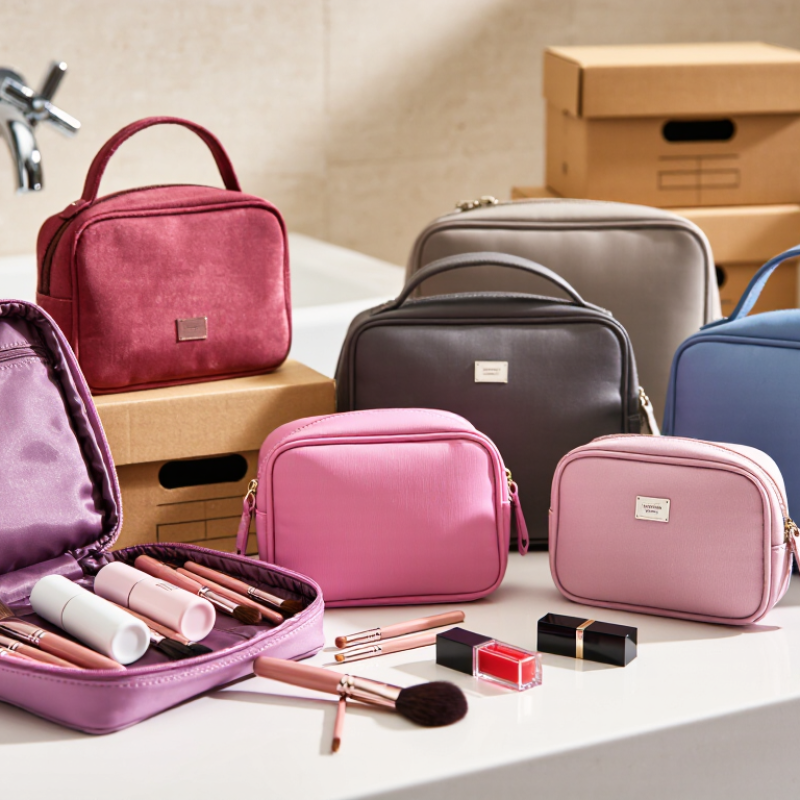
Finding the right supplier begins with a practical question: how to find a reliable makeup bag manufacturer without relying on attractive photos alone. A polished website can hide weak stitching, inconsistent sizing, or delayed production. Real evaluation requires evidence. Request physical samples and inspect the zipper, lining, seams, handle strength, and printed logo. Place the sample on a bathroom counter or inside a travel case. This reveals whether the bag is genuinely useful, not merely photogenic.
A dependable manufacturer should explain materials, production steps, minimum order quantities, sampling fees, lead times, and quality controls clearly. Ask how defects are recorded and corrected. Request factory information, relevant certifications, and references from comparable buyers. If possible, arrange a video inspection or visit the facility. Small details matter, such as labeled fabric rolls, organized workstations, and sealed cartons ready for shipment. Communication also provides strong evidence. Replies should be specific, consistent, and easy to verify.
No checklist is perfect. Even experienced buyers can overlook a hidden cost or misunderstood measurement. I once found that a “standard” pouch used a thinner lining than the approved sample. That mistake changed the final feel completely. Therefore, confirm every specification in writing and approve a pre-production sample. Compare several manufacturers before choosing one. The cheapest quote may become expensive after rework, missed deadlines, or inconsistent quality. A reliable partner may not promise everything immediately. That restraint can be a positive sign. Look for honest limits, repeatable quality, transparent processes, and a willingness to improve when something goes wrong.
Define Your Makeup Bag Manufacturing Requirements
Before searching for a reliable makeup bag manufacturer, define exactly what you need. Details matter. Set the bag’s length, width, height, weight, and storage capacity. Decide whether it should include brush loops, elastic holders, mesh pockets, or a removable divider. A clear product drawing can prevent expensive misunderstandings.
Material selection also affects performance and cost. Consider coated fabric for easy cleaning, padded layers for protection, and strong zippers for frequent use. Specify stitching density, lining quality, color standards, and logo placement. My first specification was too vague, and the sample looked attractive but lacked enough internal space. That mistake taught me to measure real products before approving a design. Request a physical sample, then test the zipper, seams, handle, and waterproofing under practical conditions.
Tips:
Prepare a requirement sheet with target quantity, acceptable sample changes, packaging needs, and delivery expectations. Include clear inspection standards, such as neat stitching and accurate dimensions. Ask manufacturers how they handle material substitutions or production defects. Their answers reveal their experience and communication habits. Keep a small tolerance range for measurements, because handmade or fabric products rarely match every dimension perfectly. However, tolerance should never excuse weak construction or inconsistent quality.
Research and Shortlist Potential Manufacturers
Researching makeup bag manufacturers requires more than comparing catalog photos. Start with five to eight candidates, then verify their factory location, production equipment, export experience, and quality system. ISO’s Survey of Certifications recorded more than one million ISO 9001 certificates worldwide in 2023, but certification alone proves little. Ask for the certificate number, audit scope, and recent corrective-action records.
Request physical samples, not only digital images. Check zipper movement, seam strength, lining attachment, odor, colorfastness, and interior coating. A sample should survive repeated opening and closing, light rubbing, and moderate moisture exposure. Record every defect. Small details matter. Compare the sample with the manufacturer’s written specifications and production tolerances. A supplier refusing transparent answers should leave your shortlist.
Material capability also deserves careful research. Grand View Research projects continued growth in the cosmetic packaging market through 2030, increasing pressure for durable and lower-impact materials. Ask whether the factory can provide recycled-content evidence, material test reports, and batch traceability. PwC’s 2024 Voice of the Consumer Survey found that consumers were willing to pay an average 9.7% premium for sustainably produced goods, yet sustainability claims remain easy to exaggerate. I would verify them independently. My own sourcing mistakes often came from trusting attractive samples too quickly. Evaluate minimum order quantities, lead times, inspection procedures, payment terms, and communication speed before selecting a reliable partner.
Verify Quality Standards, Materials, and Production Capacity
A reliable makeup bag manufacturer should prove quality, not merely promise it. Ask for current quality certificates, test reports, and documented inspection procedures. Check whether tests cover fabric strength, colorfastness, zipper performance, and odor. Request material specifications for polyester, cotton, lining, coatings, and metal parts. Samples should match those documents. They often do not. A physical sample reveals loose threads, uneven stitching, weak corners, and rough zipper teeth. Keep approved samples for later comparison.
Production capacity needs evidence too. Review monthly output, machine numbers, skilled operators, and subcontracting arrangements. Ask how the factory handles peak seasons without reducing inspection standards. A useful audit follows one order from cutting to packing. Watch material labeling, in-process checks, final inspection, and carton storage. Confirm lead times with a small pilot order, rather than trusting an attractive schedule. Capacity is not only equipment. It is controlled consistency.
Reliable suppliers explain their quality limits clearly. They should provide an acceptable quality level, inspection records, corrective-action reports, and traceable batch information. Ask for photos or live video of production areas, but do not treat video as proof. Independent pre-shipment inspection adds useful distance. It may also expose problems earlier. Some buyers focus too heavily on price and certificates. That is a mistake worth admitting. A cheaper bag can create returns, delays, and damaged customer trust. Choose the manufacturer that can show repeatable results, realistic capacity, and honest answers when a sample fails.
Compare Pricing, Minimum Orders, and Customization Options
7 Best Ways to Find a Reliable Makeup Bag Manufacturer?
Compare the landed price, not only the unit quote. Ask for fabric, zipper, printing, packing, inspection, and freight costs separately. A low price may hide expensive tooling or weak stitching. Grand View Research estimated the global cosmetic packaging market at nearly USD 30 billion in 2023. That scale attracts capable suppliers, but also rushed factories. Request quotations at several quantities, such as 500, 2,000, and 10,000 pieces.
Check minimum order quantities carefully. A lower MOQ can reduce inventory risk, but it may increase the unit cost. Ask whether color, lining, logo method, and size each require separate minimums. Request a physical sample before approving production. Measure the bag, test the zipper repeatedly, and inspect seams under bright light. Small faults become costly when multiplied.
Customization deserves a written comparison. McKinsey’s 2021 personalization report found that 71% of consumers expect personalized interactions. For makeup bags, that can mean compartments, washable lining, recycled fabric, or custom colors. Ask which options affect price, lead time, and sample fees. Verify material specifications through test reports or supplier documentation. Review factory photos, capacity records, and recent customer references. One common mistake is trusting a polished sample too quickly. Production quality can differ. Use a pre-shipment inspection and clear acceptance standards.
Evaluate Samples, Communication, and Long-Term Reliability
Finding a reliable makeup bag manufacturer starts with physical samples, not polished photos. Request several sizes, fabrics, linings, zippers, and printed details. Examine stitching under bright light. Check whether the zipper opens smoothly and whether the lining pulls away at the corners. Smell the material, too. A strong sample should survive repeated opening, light pressure, and careful cleaning without losing its shape.
Communication reveals more than sales claims. Ask for a clear production schedule, material specifications, inspection steps, and packaging details. Reliable manufacturers answer directly and record changes in writing. They should explain what happens when fabric, color, or hardware becomes unavailable. Test this process with a small order. Replies that are fast but vague can create expensive problems later. Clear questions matter.
Long-term reliability depends on consistency, not one excellent prototype. Review previous production records, quality reports, and realistic delivery performance. Ask how defects are measured and corrected. A responsible factory will discuss problems without hiding behind excuses. I once treated a perfect sample as enough evidence; that was a mistake. Bulk production exposed uneven seams and different zipper tension. A second inspection plan would have caught both issues. Request progress photos, approve a pre-production sample, and keep written quality standards for every order. Small details become major costs.
FAQS
Start with five to eight candidates. Verify factory location, equipment, export experience, and quality procedures. Ask for clear records. Avoid suppliers that give vague replies.
No. A certificate shows a system, not every production result. Request the certificate number, audit scope, and corrective-action records. Proof matters more.
Test the zipper repeatedly. Check seam strength, lining attachment, loose threads, odor, and interior coating. Rub the fabric lightly and expose it to moderate moisture. Record every defect.
Keep approved samples for production comparison. Check zipper movement, corner strength, stitching, and color against the sample. Memory is unreliable.
Request material specifications, recycled-content evidence, test reports, and batch records. Check fabrics, linings, coatings, and metal parts separately. Sustainability claims can sound better than reality. Independent verification is wiser.
Review monthly output, machine numbers, skilled operators, and subcontracting arrangements. Ask how inspections continue during busy seasons. Capacity means consistent control, not just many machines.
Test the schedule with a small pilot order. Track cutting, sewing, inspection, packing, and shipment preparation. An attractive schedule can still fail. I have trusted one too quickly before.
Request inspection procedures, defect limits, batch traceability, and corrective-action records. Consider independent pre-shipment inspection. It can catch weak corners, rough zipper teeth, or uneven stitching before shipment.
Conclusion
Finding the right supplier begins with clearly defining your makeup bag manufacturing requirements, including bag size, materials, design features, intended use, packaging, target market, and expected order volume. Once your specifications are organized, research and shortlist manufacturers that appear capable of meeting them. Review their experience, production facilities, product range, and customer service approach before moving forward.
To understand how to find a reliable makeup bag manufacturer, carefully verify each candidate’s quality standards, material consistency, production capacity, and ability to maintain stable output. Compare pricing, minimum order quantities, lead times, and customization options to identify the best overall value rather than choosing solely by the lowest quote. Request samples to assess workmanship, zippers, stitching, lining, durability, and appearance. Throughout the process, evaluate communication speed, transparency, problem-solving, and willingness to provide updates. A manufacturer that delivers consistent samples, communicates clearly, and supports long-term cooperation is more likely to become a dependable production partner.

 Jaspa Beauty