Frequent travel can turn a neat beauty routine into a loose collection of bottles, brushes, and leaking tubes. The right cosmetic storage should protect products while keeping daily essentials visible and easy to reach. It must also fit changing schedules, small hotel bathrooms, and crowded carry-on spaces.
Travel-packing expert Hitha Palepu offers a useful principle: “The best packing system is the one you can repeat.” That idea shapes how to choose cosmetic storage solutions for frequent travelers. Look for washable compartments, strong zippers, leak-resistant pouches, and flexible sections. A clear pocket can hold contact-lens solution or skincare minis. A narrow brush sleeve can prevent powder from settling into bristles. Small details matter.
Size alone is not enough. A large case may seem practical, yet it can encourage overpacking. A compact organizer may save space, but it might crush delicate compacts. Frequent travelers should test access, weight, cleaning, and durability before trusting a storage system for regular trips. Materials should feel sturdy, not merely attractive.
There is no perfect case.
Even experienced travelers misjudge what they need. I sometimes pack one “emergency” product too many, then ignore it for the entire trip. That mistake reveals an important lesson: cosmetic storage should support real habits, not imagined routines. This guide examines practical formats, including hanging bags, modular cubes, hard-shell cases, and transparent pouches. The goal is simple: protect cosmetics, reduce mess, and make every departure slightly easier.
What Is the Best Cosmetic Storage for Frequent Travelers?
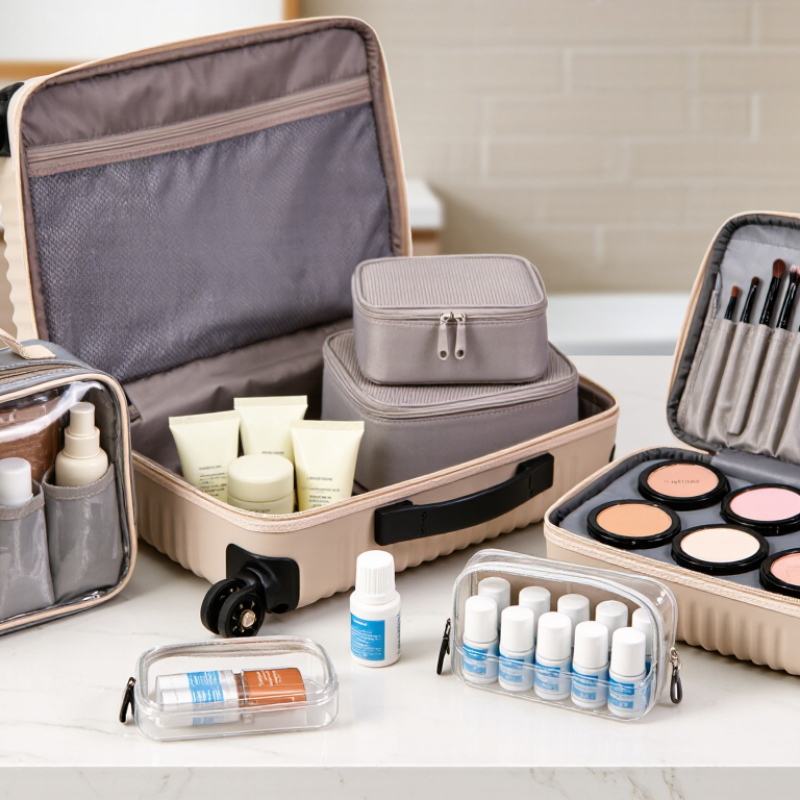
Frequent travelers usually need more than one type of cosmetic storage. A hanging toiletry bag works well in small hotel bathrooms. Its vertical pockets keep bottles away from the sink. Choose one with a washable lining and strong stitching. I have found that clear compartments make daily routines faster, especially during early departures. However, hanging bags can become bulky when every pocket is filled.
A compact compartment case suits makeup, brushes, and small skincare items. Firm dividers prevent powders from breaking and protect delicate applicators. Look for smooth zippers, rounded corners, and enough depth for closed containers. A separate clear pouch helps organize liquids during security checks, although airport requirements can differ by location. Always check current airline and airport guidance before packing. Small refillable bottles can reduce weight, but poor seals may cause leaks.
For longer trips, modular storage cubes offer better flexibility. One cube can hold skincare, another can store cosmetics, and a slim pouch can carry cotton pads or tools. Solid products also reduce spill risks. Keep them in sealed bags anyway. I once trusted a supposedly leakproof bottle and stained an entire shirt. That mistake still shapes my packing habits. The best system is not always the largest one. It should match your routine, luggage space, and willingness to unpack carefully.
| Storage Type | Typical Capacity | Portability | Organization | Protection | Best Use | Main Limitation |
|---|---|---|---|---|---|---|
| Clear Toiletry Pouch | 1–3 liters | Very light; folds easily when empty | Basic; usually one main compartment | Low to moderate; flexible sides offer limited cushioning | Short trips and liquid essentials | Items can shift or become difficult to find |
| Hanging Toiletry Bag | 2–6 liters | Compact when rolled or folded; includes a hanging hook | Several zippered pockets and elastic loops | Moderate; separated compartments reduce contact between items | Frequent travelers who need quick bathroom access | Requires a suitable place to hang |
| Structured Cosmetic Case | 3–8 liters | Moderate; keeps its shape in luggage | Good; trays, dividers, or dedicated sections may be included | High; rigid walls help protect powders and containers | Longer trips and complete makeup routines | Heavier and less flexible than a pouch |
| Makeup Organizer Box | 5–15 liters | Low to moderate; best in checked luggage or a roomy carry-on | Excellent; multiple compartments and adjustable dividers | High; hard or semi-hard shells resist compression | Travelers carrying many cosmetics or tools | Takes up considerable luggage space |
| Brush Roll | 8–20 brushes or tools | Light and narrow; rolls tightly | Excellent for brushes, pencils, and slim tools | Moderate; individual sleeves protect bristles | Professional kits and travelers using multiple brushes | Does not store large bottles or palettes efficiently |
| Modular Packing Cubes | 1–10 liters per cube | Lightweight and stackable | Very good; separate cubes can divide skincare, makeup, and hair care | Moderate; fabric sides provide little impact protection | Travelers who prefer flexible luggage organization | Containers may need extra leak protection |
| Transparent Liquid Bag | Usually up to 1 liter for cabin liquids | Very portable and easy to remove from luggage | Limited; designed mainly for bottles and containers | Low; transparent material improves visibility but not cushioning | Air travel with liquid, gel, or aerosol cosmetics | Not suitable for organizing a full makeup collection |
Choose a rigid, transparent toiletry case with a wide base. It protects bottles and keeps contents visible. A washable lining helps with spills.
Transfer creams, cleansers, and shampoo into small, leak-resistant containers. Leave a little empty space for pressure changes. Tighten each cap firmly.
No. Place each liquid in a separate resealable pouch. Add thin absorbent tissue around the container. Small details matter.
Place a small cotton pad beneath each lid. It cushions powders during rough handling. I sometimes forget this step, and cracked powder proves it matters.
Wrap glass containers in clothing instead of loose plastic. Clothing absorbs impact and prevents bottles from knocking together. Pack them carefully.
Separate weekly-use products from backup items. Review the pouch after every trip. Unused “just in case” products often remain unnecessary.
Remove all products and shake out loose powder. Wipe the lining with warm water and mild soap. Let every section air-dry completely.
No. Never seal it while damp. Moisture can create odors and hidden residue. Shortcuts fail here.
Inspect seams, zippers, elastic loops, and the lining monthly. Replace it when odors remain, the lining stays sticky, or sharp zipper edges appear.
Place a clean tissue inside overnight. Oil marks suggest remaining residue. A pouch may look dry but still be dirty. That assumption can be wrong.
Choosing the best cosmetic storage for frequent travelers begins with understanding your routine, trip length, and packing space. Options may include compact pouches, divided cases, hanging organizers, leak-resistant containers, and modular bags that can be adjusted for different amounts of makeup and skincare. The most effective organizer should be lightweight, durable, easy to clean, and designed with secure closures, practical compartments, and transparent sections for quick access. Knowing how to choose cosmetic storage solutions for frequent travelers can help you balance capacity, portability, and protection without carrying unnecessary items.
For short trips, a small structured pouch may be enough, while longer journeys may require expandable storage with separate areas for liquids, tools, and fragile products. Packing bottles upright, sealing caps, using protective sleeves, and placing liquids in separate waterproof compartments can reduce spills and clutter. Regularly wiping the organizer, checking zippers and seams, and replacing damaged or stained storage keeps it hygienic and reliable for future travel.

 Jaspa Beauty